When I found out I’d won Theo Paphitis #SBS (Small Business Sunday) this month, I did a happy dance, told absolutely everyone, and then did something a bit less glamorous. I set up my winner’s profile.
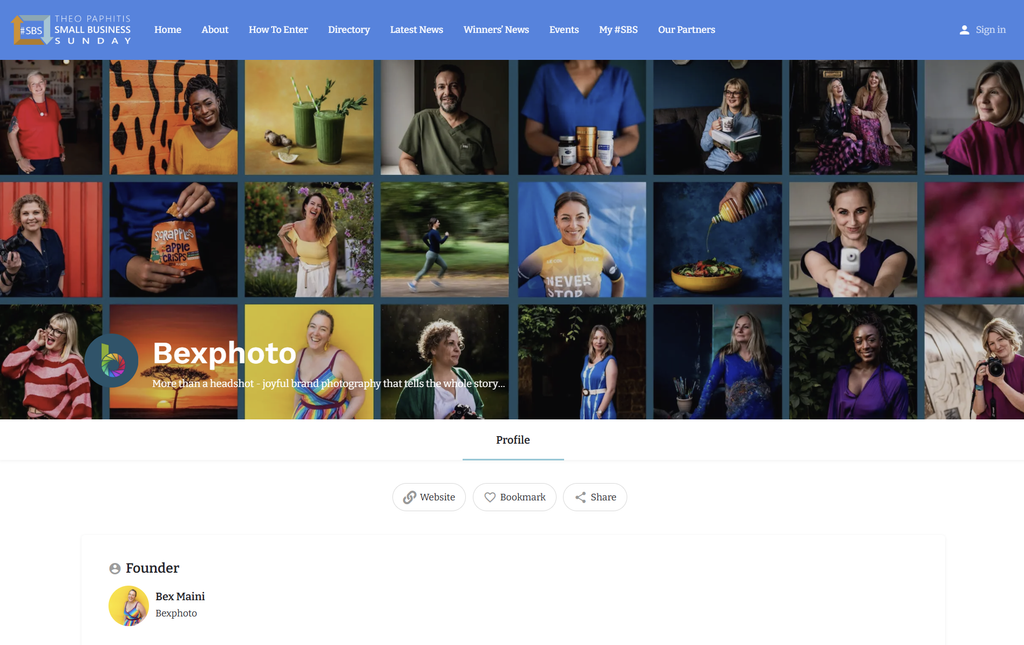
Why the rush? Because that little profile page on the #SBS website links straight back to bexphoto.com. And that one link is quietly working away for me, helping Google and real people find me, trust me, and take me seriously.
Links are one of those things most of us know we “should” think about, but nobody really explains. So grab a cuppa and let’s join the dots (rainbow-coloured ones, obviously). No jargon overload, I promise!
First things first: what is a link?
A link is just a clickable bit of text (or an image or button) that takes you from one page to another. But not all links are the same, and there are three kinds worth knowing about:
- Incoming links (backlinks): links on someone else’s website that point to yours. These are gold dust.
- Outgoing links: links on your website that point to someone else’s.
- Internal links: links from one page on your website to another page on your own website.
Think of it like a networking event. Incoming links are other people recommending you. Outgoing links are you recommending other people. Internal links are you showing a guest around your own house. All three matter, just in different ways.

Why links matter so much
SEO (being found on Google). Google treats a link from another website a bit like a vote of confidence. If lots of relevant, trustworthy sites link to you, Google takes that as a sign you’re worth showing people. It’s not the only thing Google looks at, but it’s a big one.
Trust. This one’s about humans, not robots. If someone reads about you on a website they already trust, some of that trust rubs off on you before they’ve even clicked through. A recommendation always beats shouting about yourself.
Authority. Not all votes are equal. One link from a well-respected, relevant website is worth far more than a hundred links from random directories nobody visits. Quality wins over quantity every single time.
Real visitors. We sometimes forget this bit! Links aren’t just for Google. Actual people click on them, land on your website, and some of those people become clients.
Where do incoming links come from?
The good news is you probably have more opportunities than you think. Here are the ones that have worked for me.
Awards and wins. My #SBS winner’s profile is a perfect example. A well-known, trusted website, a page all about my business, and a link back to me. If you win or get shortlisted for something, always check whether there’s a profile or winners’ page you can claim.
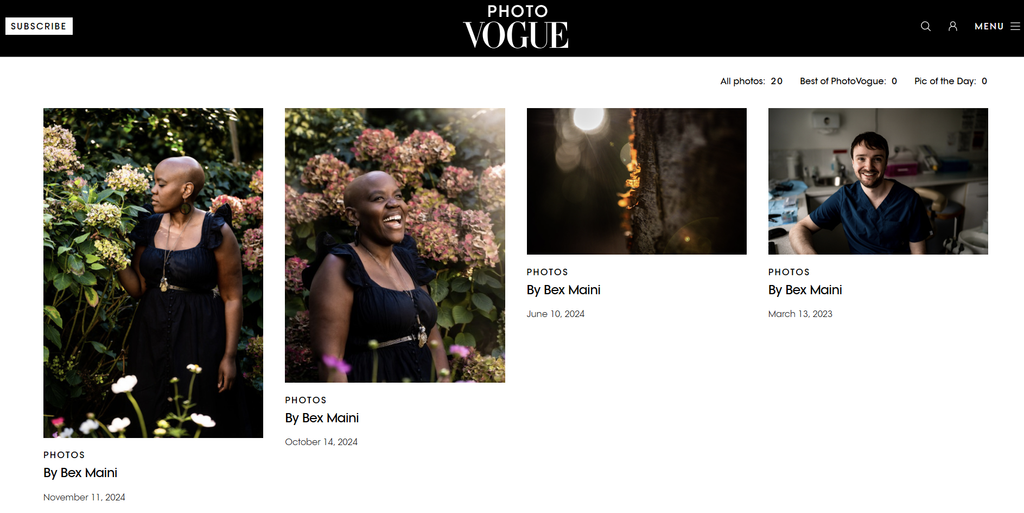
Press features. Over the years my work has been featured by PhotoVogue and National Geographic online. Features like these build credibility on their own, but when an online feature links back to your website too, that’s a double win. If a journalist or blogger writes about you, it’s absolutely fine to politely ask if they could include a link, please.
Memberships and directories. Business groups, chambers of commerce and professional associations often have member pages. I’m a member of the Uckfield & District Chamber of Commerce, and my bio there points people back to me. Check every group you belong to and make sure your listing is up to date and actually links to your website.
Clients and collaborators. I don’t ask my paying clients for a credit, but some lovely clients add one anyway, and it’s always welcome! Collaborations are different. When I team up with fellow suppliers on a shoot or project, a credit with a link back to bexphoto.com is part of the deal, and I credit them right back.
Guest blogs and podcasts. Writing a guest post for someone else’s blog, or appearing on a podcast (I still remember my first one, on The Shared Shutter with Sarah Krieg!), usually comes with a bio and a link back. You share something useful, they get great content, and you get a link from a relevant site. Everyone wins.
Why linking out helps you too
Some people worry that linking to other websites sends visitors away. I get it, but I think it’s the opposite. Generous linking makes you look confident, well-connected and genuinely helpful.
- It helps your readers. If you mention a great copywriter, a lovely venue or a useful tool, linking to it saves your reader a Google search. Helpful content keeps people coming back.
- It shows you know your stuff. Linking to good, relevant sources shows you’re part of a wider community and you’ve done your homework.
- It builds relationships. People notice when you link to them, and they often return the favour. Community over competition, always!
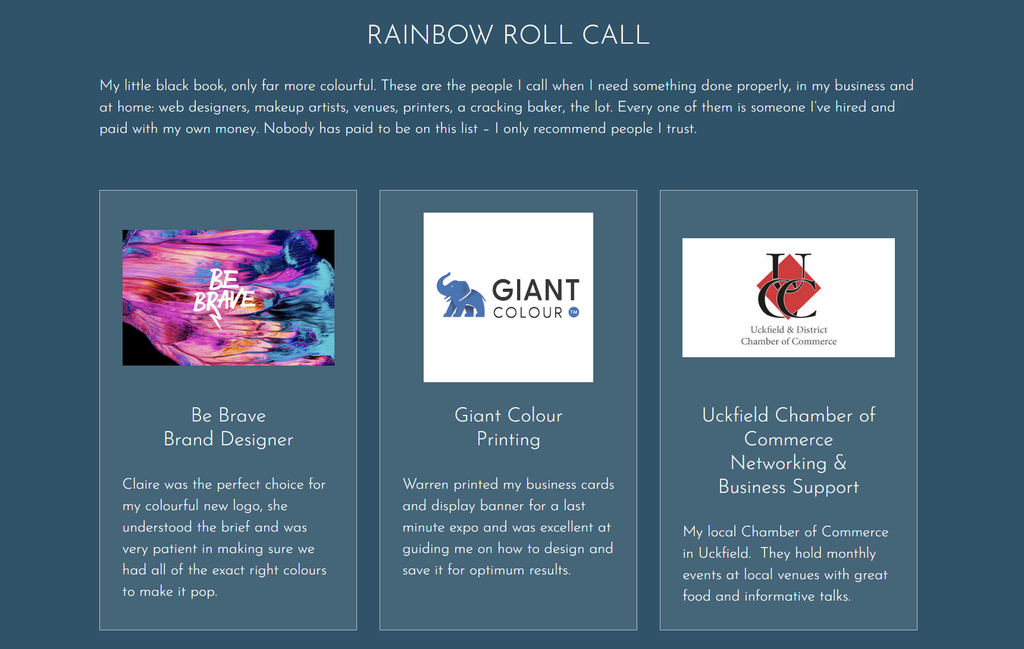
This is exactly why I built The Contact Sheet, a directory on my website full of my trusted collaborators, past clients and Sussex Business Club members. It’s genuinely useful for my readers, it’s a lovely way to celebrate the people I work with, and every one of those links is a little thank you.
Linking both ways: how it works
The magic really happens when links go in both directions between businesses that genuinely belong together.
Take the Sussex Business Club, the networking group I run. Our members are listed in The Club section of The Contact Sheet, so my website links out to each of them. In return, members can pop a Sussex Business Club badge on their own website, which links back to the club page. Their visitors see they’re part of a real, local community, and my website gets a relevant local link. It’s a proper two-way street.
The #SBS badge works the same way. Winners display it on their websites, it links back to #SBS, and #SBS links to the winners’ profiles. Everyone gets a little boost of trust from being connected.
A word of warning. Two-way links are brilliant when they’re natural and relevant. What Google doesn’t like is “you link to me and I’ll link to you” swaps done purely to game the rankings, especially with websites that have nothing to do with your business. A good rule of thumb: would this link genuinely help someone reading the page? If yes, go for it. If it only exists for Google, skip it.
Don’t forget your own website
Internal links are the easiest win of all, because you’re in complete control. Linking between your own pages helps visitors find more of what they’re looking for, keeps them on your site for longer, and helps Google understand which pages matter most.
If you write a blog post about your services, link to your services page. If you mention a past project, link to it. Every page should gently lead somewhere useful.
A few techy bits, explained simply
- Anchor text is the clickable words in a link. “Click here” tells Google and readers nothing. “Brand photography packages” tells them exactly what they’ll find.
- Nofollow and sponsored links are labels that tell Google not to treat a link as a full vote. Paid or sponsored links should always be labelled this way. They can still bring you visitors, they just carry less SEO weight.
- Broken links point to pages that no longer exist. They’re frustrating for visitors and look a bit neglected, so check your website every few months.
- Buying links is a no from me. Google is very good at spotting paid link schemes, and it can do your website more harm than good.
Your link-building checklist
Save this one for a quiet afternoon with a cuppa:
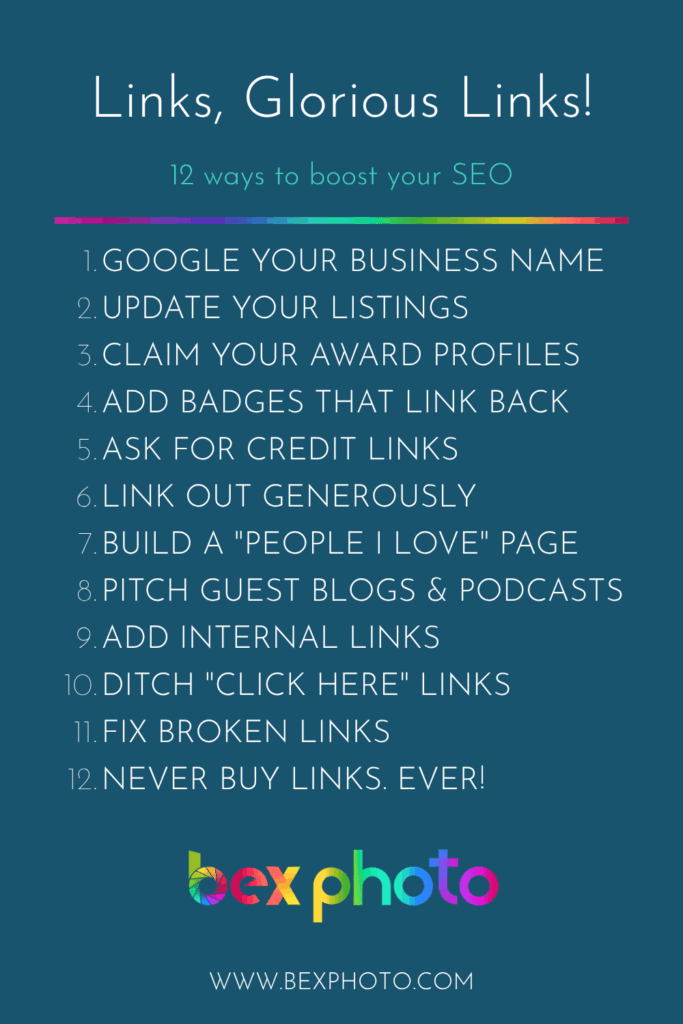
- Google your business name and see who’s already mentioning you. Do they link to your website? If not, ask nicely.
- Check every membership, networking group and directory you belong to. Is your listing up to date, with a working link?
- Look for any awards, wins or shortlists with profile pages you haven’t claimed yet.
- If you have a badge from a membership or award, add it to your website and make sure it links back.
- Ask clients and collaborators to link to you when they mention or credit you.
- Link out generously to suppliers, collaborators and clients you genuinely recommend.
- Consider a directory or “people I love working with” page on your own website.
- Pitch a guest blog or podcast appearance somewhere your ideal clients hang out.
- Add internal links to your blog posts, pointing to your services and related posts.
- Swap any “click here” links for descriptive words.
- Check for broken links every few months.
- Never buy links. Ever!
Want more tips like this?
Join the Iridescent Insiders, my monthly newsletter that lands in your inbox on the first Monday of every month. Every edition has a Bright Ideas section packed with practical tips like these, from my Business Basics Series, for showing up and getting noticed, plus behind-the-scenes news, client shout-outs and the odd little treat. Sign up here and I’ll see you in your inbox!