Get the Basics Right: How to Set Up Your Business for Success
The start-up guide I wish I'd had!
Hello, I’m Bex! I’m a brand photographer based in Uckfield, East Sussex, and I’ve been photographing people professionally since 2017. I also run the Sussex Business Club, mentor other photographers, and (plot twist) work part-time as a dentist.
When I started out, nobody handed me a list of the things I really needed to know. I learnt most of it the slow way – by getting it wrong first, or finding out years later that there was a much easier way to do it.
So this is that list. It’s everything I wish someone had told me at the start, from your brand colours to your tax bill, with practical tips on how to actually do each one well and where it’s actually worth investing your money.
If you’re just starting out, work through it in order. If you’ve been going a while, dip into whichever card catches your eye – I’d bet there’s at least one thing in here you haven’t got round to yet! I’ve kept each one to the basics, with links to blog posts along the way if you want to dig deeper – just look out for the pink links.
Grab a cuppa and let’s get your foundations sorted.
First things first
I’m assuming you’ve already got a business name and a home online. If not, here’s a quick check before you dive in:
- A business name that’s easy to spell, say and search for. Google it first to make sure nobody else is already using it, and that it isn’t too similar to a big brand – you don’t want to be lost in their search results, or get a letter from their lawyers! Check the UK trade mark register on gov.uk too, and make sure the domain and social handles are free before you fall in love with it.
- Your own domain (yourbusiness.com or .co.uk). Buy it even if your website isn’t ready yet.
- A simple website. Even one page with what you do, who for and how to get in touch is a great start. (If you need help with this, check out the Rainbow Roll Call on The Contact Sheet – my directory of recommended suppliers, including my web designer.)
- Matching social handles. The same name everywhere makes you easier to find.
- Register with HMRC as a sole trader, or set up as a limited company.
Ready to dive in? Click a card below to jump straight to the section you need, or keep scrolling for the full step-by-step guide.
Your brand

Know your ideal client
Getting seen
Behind the scenes
Looking after yourself

Know your ideal client
Your colours, your words, your photos and where you show up all depend on who you’re talking to. “Anyone who’ll pay me” feels safer at the start, but trying to speak to everyone means nobody feels like you’re talking to them.
- Picture one real person. Think of a favourite client (or the one you’d love to have). What do they do, what keeps them up at night, what makes them laugh?
- Write down their words. How do they describe their problem? Use their language, not industry jargon.
- Know what holds them back. Price? Time? Fear? Name it, then answer it in your content.
- Know who you’re not for. It’s not rude, it’s helpful. The wrong-fit clients will happily go elsewhere, and the right ones will feel even more at home with you. Attract AND repel for the best results.
- Revisit it every year. Your business grows and changes, and your ideal client might too.
Read more: What I don’t do (and why that’s a good thing) – coming soon

Your brand - colours, fonts and consistency
Your brand is the feeling people get when they come across your business, and your visuals do a lot of that work before anyone reads a word. Research suggests colour alone can boost brand recognition by up to 80%.
As a self-confessed colour obsessive, I’m a little biased – but I’ve watched people recognise me in real life purely from my rainbow Instagram feed. That’s consistency doing its job.
- Choose colours on purpose. Every colour carries a mood. Pick ones that suit your personality and your ideal client, not just this year’s trend.
- Keep it simple. One or two main colours, a couple of accents and a neutral is plenty. Write down the hex codes so they’re exactly the same every time. (Yes, I know – I have ALLLLL the colours! But the rainbow IS my brand, I use the exact same palette everywhere, and one deep teal background anchors it all so it still hangs together. That’s rare though – for most businesses, fewer colours are far more memorable.)
- Pick two fonts, max. One for headings, one for body text. Make sure they’re easy to read on a phone.
- Get a logo that works everywhere. Light and dark backgrounds, tiny and huge, colour and monochrome.
- Use them everywhere. Website, social media, emails, invoices, business cards, even your email signature. Same colours, same fonts, same logo, every time.
- Save them in one place. A Canva Brand Kit is perfect for this (more on Canva in the Tools section).
Read more: my Colour And Your Brand series explores each colour in turn – the psychology, famous brands that use it, and how to bring it into your photos.

Content pillars
Content pillars are the 3-5 themes you keep coming back to in everything you post. They’re the cure for staring at a blank screen wondering “what on earth do I post today?”
- Mix it up. A good set includes something that shows your expertise, something that shows your personality, something behind the scenes, and something that sells.
- Link them to your ideal client. Each pillar should answer a question they have or a worry that holds them back.
- Brainstorm ideas under each one. Ten ideas per pillar and you’ve got a few months of content sorted.
- Rotate through them. Rather than posting whatever comes to mind, work your way round the pillars so your feed stays balanced.
- Let them evolve. Notice which pillars get the most engagement (and enquiries!) and lean into those.
Mine include storytelling, confidence, behind the scenes, community and practical tips – you’re reading one of those right now!
Read more: Content pillars blog post coming soon
Brand photos
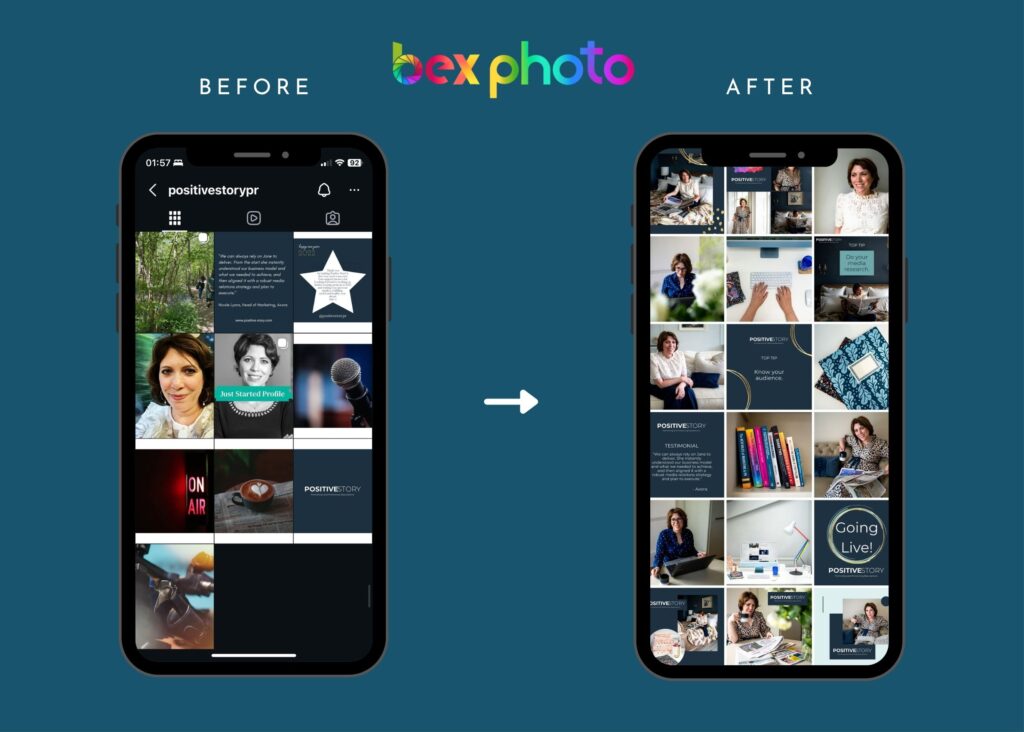
Photos of you, your work and your world let potential clients get to know you before they ever get in touch – and they make everything else on this page easier, from your website to your social posts.
(Yes, I’m a brand photographer, so I would say that. But I’d say it anyway!)
- Show your face. Even if you’re camera-shy. Your clients want to know who they’ll be working with or who made the product.
- Go beyond a headshot. Aim for a mix: portraits, you at work, details, products, your workspace and behind the scenes. Show your personality and get your values across. That’s what tells your story.
- Build an image library. Enough photos to use across your website, socials and emails for months, so you’re not scrabbling for something every time you post.
- Plan before you shoot. Think about where the images will be used, what your brand colours are, and what you want people to feel.
- Look like you. Wear what you’d wear to meet a client, in colours that suit your brand. People should recognise you when they meet you in person.
- Refresh regularly. Your business changes, so your photos should keep up. A top-up every year or so keeps things fresh.
Not sure where to start? My free brand shoot checklist walks you through it, whether you book with me or not.
Read more: How to use your brand photos

Words that work
Your photos catch people’s eye, and your words tell them why they should stay.
- Nail your one-liner. Can you say what you do, and who for, in one sentence? If not, start there.
- Talk about them, not you. Lead with your client’s problem and how you help, then tell them about yourself.
- Write like you speak. If you wouldn’t say it out loud to a client over coffee, rewrite it.
- Make your About page about connection. Share your story, your values and a bit of personality. It’s often one of the most visited pages on a website. So remember, it’s about THEM not you – why they should pick you.
- Keep your bios consistent. Same message across your website, Instagram, LinkedIn and anywhere else you show up.
- Tell people what to do next. Every page and post should have a clear next step – book a call, sign up, send a message.
Want a hand with your words? My go-to copywriter is Jo Martin, The Grammar Mamma. She writes warm, clear copy that sounds like you, and she runs Ready Steady Write, her accountability co-working sessions (more on those in the Tools section). Grab her free social media plan here: 30 Social Media Post Ideas.

Getting found
The best brand in the world won’t help if nobody can find it.
- Own your website. Social media platforms can change the rules overnight, but your website is yours. Get your own domain name and a matching email address. you@yourbusiness.com looks far more professional than a Gmail – and it’s required to send emails to your mailing list (see the Mailing list section).
- Set up a Google Business Profile. It’s free and it’s how local customers find you on Google Maps and search. Add photos, opening hours and your services, and keep it updated.
- Collect reviews. Ask every happy client, every time. Send a direct link so it takes them seconds, not minutes. Reviews build trust and help you rank higher on Google.
- Tag people properly. Tagging clients, collaborators and venues puts your work in front of their audience too. Here’s how to do it well: The Power of Tagging.
- Link with purpose. Linking between your own pages, and getting links from other sites, helps Google understand and trust your website. More here: How Links Boost Your SEO (blog post coming soon).
- Add alt text to your images. A short description of what’s in each photo helps people using screen readers, and helps Google too.
- Have your elevator pitch ready. A 30-second answer to “so what do you do?” for networking events, podcasts and bios.
- Set up Google Analytics and Search Console early. Both are free. Analytics shows who visits your website and where they came from; Search Console shows what people searched on Google to find you. Start now, so in a year you’ve got data to compare against – then actually check it once a month (I’m still working on that one myself!).
Your mailing list and lead magnets
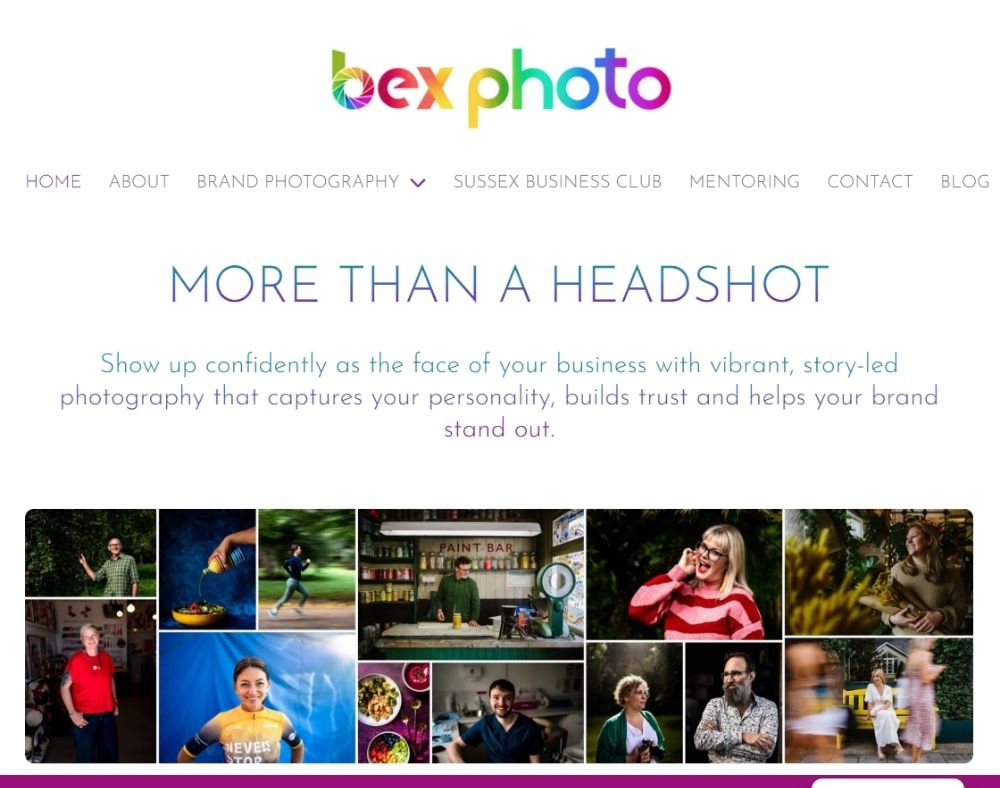
Nobody can change the algorithm, close your account or decide who gets to see your emails. Start a list from day one, even if it’s tiny.
- Give people a reason to sign up. “Join my newsletter” rarely works on its own. A lead magnet does – a checklist, template or free guide that solves a real problem (like my pocket guide to this page!).
- Make your lead magnet genuinely useful. It shows off your knowledge and personality, builds trust, and should help people whether they ever buy from you or not.
- Set up a welcome sequence. A few automated emails that introduce you, share your best tips and gently show how you can help.
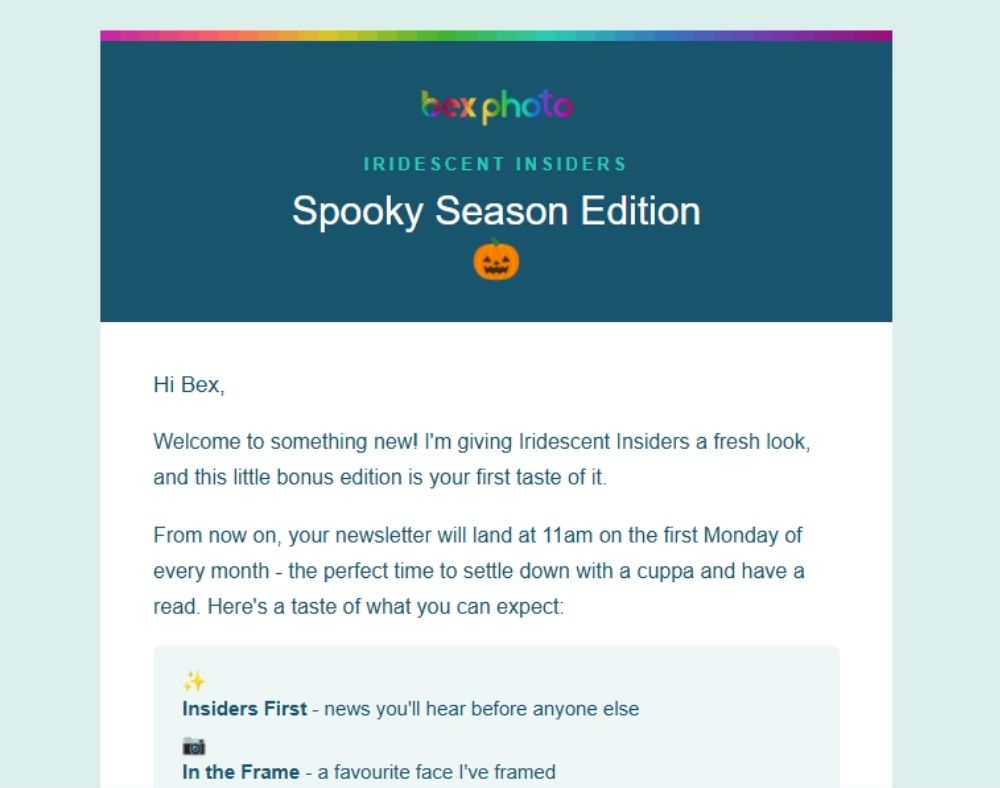
- Email regularly. Monthly is fine. Consistency matters more than frequency, so only promise what you can keep up.
- Be yourself. Emails are a lovely, personal space. Share stories, wins, tips and behind the scenes, not just offers.
- Get consent properly. Only add people who’ve signed up, and always include an easy unsubscribe link (more in the Legal bits section).
- Send from your own domain. Most email platforms, including MailerLite, won’t let you send from a Gmail or other free email address any more, after Google and Yahoo tightened their rules in 2024. Use you@yourbusiness.com and verify your domain, so your emails land in inboxes rather than spam.
An Iridescent Insiders Newsletter
Tools to save your sanity
The right tools give you back hours every week. These are the ones I’d set up first.
- A CRM. A client management system keeps enquiries, contracts, invoices and emails in one place. It takes time to set up and might not feel essential with your first few clients – but spend the time now and save your sanity later! I use Studio Ninja, which is specific to photographers. Others worth a look include Dubsado and Bonsai – most offer a free trial, so try a couple before you commit.
- Mettle. A free business bank account that keeps your money separate from your personal spending, with handy pots for setting aside tax. Even better, it comes with FreeAgent accounting software for free, so your tax records practically keep themselves.
- Canva. Worth paying for Pro, at around £100 a year (less than £2 a week!). Try the 30-day free trial first and see how much time it saves you. Set up your Brand Kit with your colours, fonts and logo, then make templates for posts, guides and graphics so everything stays on brand in a few clicks.
- MailerLite. Easy, affordable email marketing with sign-up forms, automations for your welcome emails, and a free plan to get you started.
- Ready Steady Write. Jo’s twice-weekly accountability co-working sessions. Perfect for finally writing that blog post, newsletter or About page you keep putting off.
- A networking group. Not an app, but one of the most useful tools I know (more in the Find your people section).
Read more: Tools blog post – coming soon
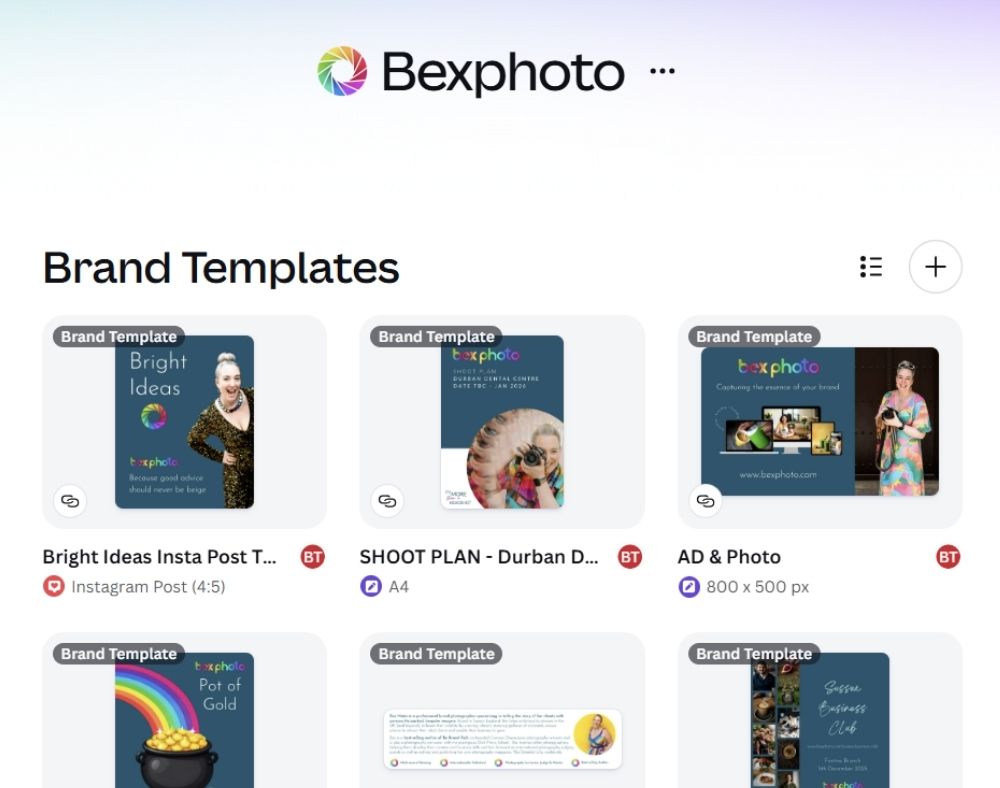
My Canva templates save me hours of work
Money - pricing, getting paid and tax
Nobody starts a business because they love spreadsheets, but staying on top of your money early saves a lot of stress later.
Pricing
- Don’t undercharge to “get started”. Low prices are hard to raise later and attract clients who choose on price alone. If you want to share an introductory offer, make it clear what your usual price will be. I always send an invoice, even if it’s discounted to zero for collabs, so they know the value of what they’re getting.
- Work out your real costs. Include your time, software, travel, insurance, tax and the admin hours nobody sees. Remember to include sickness and holiday allowance too.
- Price with confidence. Your fee reflects your experience and everything you bring, not just the hours on the day. My clients aren’t paying me for the minutes they’re with me, but for the years I’ve spent accumulating knowledge and experience and working on my talent.
Getting paid
- Make it easy to pay you. Stripe is a trusted, low-cost way to take card payments, and it links up with most CRMs, websites and booking systems. It’s what I use, and clients can pay in a couple of clicks.
Tax
- Keep business money separate. A separate business account makes everything clearer at tax time.
- Set aside tax as you go. Move a percentage of every payment into a separate pot the day it lands, so the money’s waiting when the bill arrives.
- Use accounting software. Snap receipts, track expenses and record income as you go, instead of a shoebox of paperwork every January.
- Know your dates. If you’re self-employed in the UK, you’ll need to register for Self Assessment with HMRC, and the return and payment are usually due by 31 January. Check gov.uk for the current rules, including Making Tax Digital.
- Get an accountant if it all feels too much. They often save you more than they cost.
I’m not an accountant, so please check anything you’re unsure of with HMRC or a qualified professional.

The legal bits
Not the most exciting section, but getting these sorted early protects you, your clients and your business.
-
Data protection (GDPR). If you keep client details or run a mailing list, you need a privacy policy on your website and clear consent for anything you send. If it all feels a bit daunting, my go-to for data protection is Julianne at JXG Data Protection (@jxg.dataprotection) – she takes the boring bits off your plate and makes it all make sense.
- ICO registration. Most businesses handling personal data need to pay the Information Commissioner’s Office a small annual data protection fee. Check whether you need to at ico.org.uk.
- Insurance. Public liability, professional indemnity and equipment cover are the usual ones to look at, depending on what you do. (I use PolicyBee – we both receive £20 if you sign up with my affiliate link.)
- Contracts and terms. A clear contract sets expectations, protects both sides and makes awkward conversations much easier. Include payment terms, cancellations and what’s included.
- Get it in writing. Even for quick or free jobs, a short email confirming what you’ve agreed is better than nothing. I have a separate contract for collabs that sets out clear expectations and legalities even when no money changes hands.
- Keep records. Save contracts, invoices and important emails somewhere safe and backed up.
Again, I’m not a lawyer – if in doubt, please get professional advice.

Find your people
Running a business can be lonely. This one isn’t about finding clients – it’s about finding your community. Your business besties: the people who get it, cheer you on and are there when you need to vent.
Having people to bounce ideas off, swap recommendations, celebrate wins and commiserate over the lows with makes a huge difference.
- Find a group that feels like you. Walks, brunches, online communities – there’s no one right way.
- Go more than once. The magic happens when you start to know people and they know you.
- Give as much as you get. Share recommendations, cheer others on and tag them when you can.
If you’re local, come and join us at the Sussex Business Club for walks and brunches. I also have a list of my local favourites here: Networking Groups in East Sussex.
Read more: Community over competition blog post – coming soon

Look after yourself
You are your business’s most important asset, so look after it! It’s easy to say yes to everything and work every hour, but burnout helps nobody.
- Time block your week. Give each task a slot in your diary, including admin, marketing and actual breaks.
- Batch your content. Write or create several posts in one go, then schedule them. One blog post can also become several social posts, an email and a reel.
- Set boundaries. Decide your working hours and how quickly you reply to messages, then stick to it (mostly, this might be the hardest part!).
- Celebrate the wins. Big and small. Keep a list to look back on when it feels like nothing’s moving. I share mine weekly with Pot of Gold, inviting others to comment theirs too. It’s a great positivity boost!
- Remember why you started. Running your own business means it can flex around your life. Make the most of that.

Your first-month checklist
- Check your business name, domain and social handles
- Write down who your ideal client is
- Choose your brand colours and fonts, and note the hex codes
- Set up your Canva Brand Kit
- Pick 3-5 content pillars
- Write your one-line “what I do and who for”
- Set up an email address that matches your domain
- Set up your Google Business Profile
- Set up Google Analytics and Search Console
- Open a separate business bank account
- Set up a tax pot and accounting software
- Check your Self Assessment and ICO registration
- Sort your insurance and a basic contract
- Start your mailing list with a simple sign-up form
- Choose and set up a CRM
- Book in a brand shoot
- Find a networking group and go along!
What's next?
You’ve made it to the end – well done! Pick one thing from this page and do it this week. Small steps add up quickly.
Want your photos and words sorted together?
Jo and I created the Voice & Vision Package especially for start-ups who want to get their brand right from the beginning. Together we’ll plan your brand, capture your photos and write your key words – your messaging, social media bios, pinned posts, website headline and About page – so you can show up with confidence from day one.
Button: Find out about Voice & Vision
Not ready for that yet?
- Come along to a Sussex Business Club walk or brunch
- Follow me on Instagram at @bex.photo for more tips
- Or simply let’s have a natter – I always throw in a tip or two, whether you book with me or not!
Cheers, Bex